The German CEP market continues to grow, but pressure on the last mile is mounting. From SKR AG’s perspective, the decisive competition arises not solely from faster delivery times, but from the economic management of different delivery networks. Traditional parcel networks and hyperlocal same-day models follow fundamentally different rules regarding costs, capacity utilisation and scaling. Rico Back, Managing Partner at SKR AG, warns against equating the two business models: “Combining nationwide parcel networks with instant delivery in the same network structure means losing efficiency – and, in the end, money.”
According to the German Federal Association of Parcel and Express Logistics (BPEX), growth in the German parcel market is now being driven primarily by e-commerce. While B2C shipments recently increased by 5.5 per cent and now account for around 60 per cent of all CEP shipments, the B2B business declined slightly.
In e-commerce, the last mile is increasingly becoming the decisive competitive factor. Almost all delivery providers want to benefit from the growth of online retail. Higher shipment volumes alone, however, do not guarantee profitability. “Margins are under considerable pressure in parts of the market,” says Rico Back. “Not because demand is lacking, but because capacity utilisation, cost structures and service promises do not always align economically.”
Parcel networks between growth and margin pressure
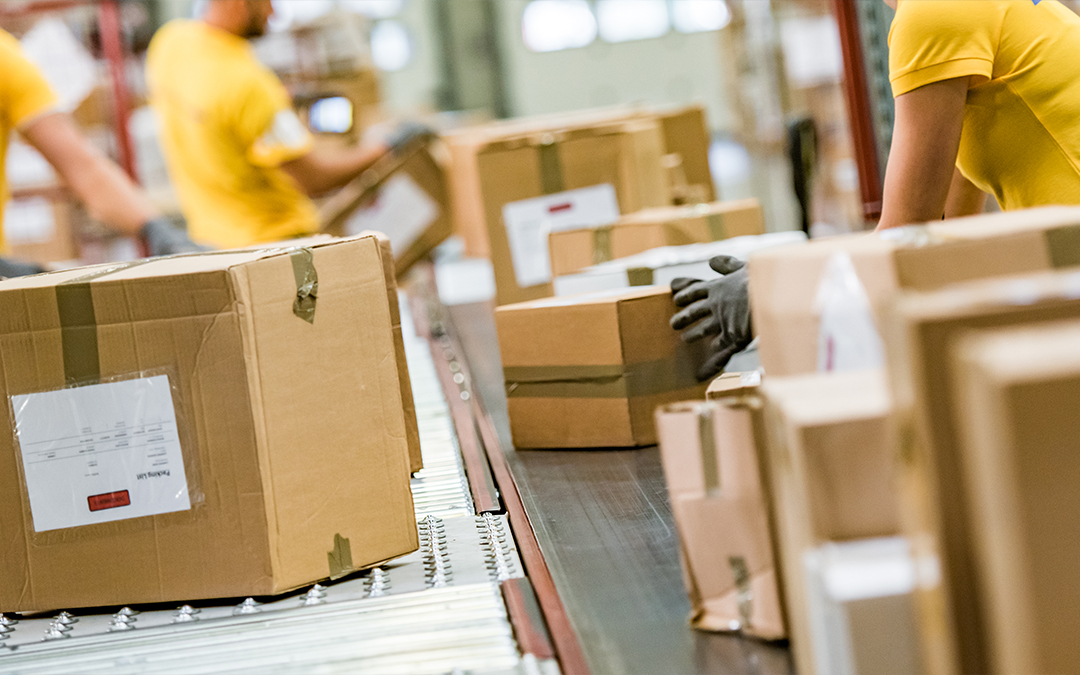
The large, nationwide parcel networks operate according to a clear economic principle: high shipment consolidation, standardised processes and economies of scale. Delivery becomes economically viable when large volumes are efficiently distributed via central hubs, consolidated main routes, direct transport and depots.
At the same time, networks are increasingly investing in urban delivery structures. Studies and municipal pilot projects show that parcel providers are making greater use of urban micro-hubs and consolidated same-day structures.
However, additional e-commerce shipments do not automatically mean higher profitability for established parcel networks. Capacity utilisation, cost efficiency and optimised 24-hour standard delivery remain crucial. Out-of-home structures and consolidated routes only work if they are embedded within a consistently optimised network.
“Speed alone does not create a functioning business model,” says Rico Back. “The key question is whether the last mile can be managed economically.”
Hyperlocal delivery follows different rules
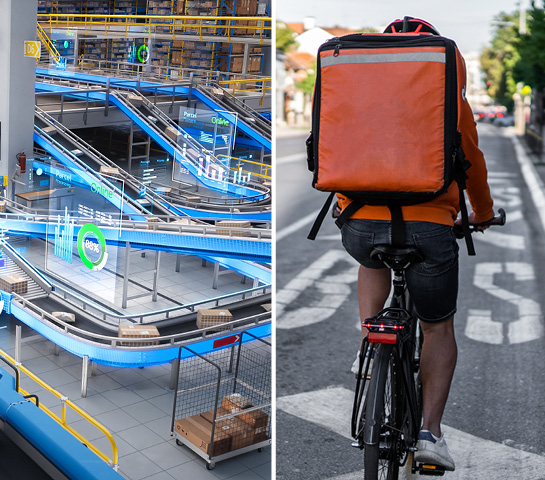
At the same time, hyperlocal delivery models have become established. Driven by quick commerce, food delivery services and same-day offers, micro-depots and local fulfilment structures enable deliveries within a few hours or minutes.
However, many hyperlocal providers are also struggling with high unit costs and the pressure to scale profitably. These models are economically viable in the long term primarily where high order frequencies and high delivery density coincide.
“Hyperlocal delivery depends on speed and density, while traditional parcel networks rely on consolidation and economies of scale,” says Rico Back. “These are not two speeds of the same business, but two economically completely different systems.”
Hybrid models such as dedicated same-day subnetworks operated by major parcel providers or partnerships with urban last-mile platforms can work, according to SKR AG. The prerequisite, however, is that they are clearly separated operationally and organisationally. If costs, capacities and revenues are mixed, gradual margin erosion becomes a real risk.
The last mile becomes a test of economic viability
According to SKR AG, future competitiveness will not be determined by delivery times alone, but above all by operational efficiency, quality and intelligent network management.
Out-of-home solutions, alternative delivery points and consolidated routes are therefore becoming increasingly important. They not only help to reduce costs on the last mile, but also increase flexibility for end customers. At the same time, the importance of technological control systems is growing. Real-time data, AI-supported route planning, automated shipment control and digital infrastructure are increasingly becoming key competitive factors in delivery logistics.
“The decisive competition is not between the models, but within each respective business model,” says Rico Back. “Anyone who fails to master costs, capacity utilisation and service quality within their own network structure will come under pressure – regardless of company size or reach.”
Competition in the CEP market will therefore be decided less by maximum speed than by the right network structure. Nationwide parcel networks must optimise costs, capacity utilisation and service quality in standard 24-hour delivery. Hyperlocal providers need to master density, frequency and additional revenue streams within their territories. Those who mix both models lose efficiency – those who optimise them separately lay the foundations for profitability.