Consumers today expect delivery options that are flexible and convenient. Parcel service providers, for their part, are struggling with rising delivery costs, traffic and delivery problems in city centres, and growing pressure on margins. Parcel shops, parcel lockers and other out-of-home solutions are therefore growing rapidly across Europe. “Home delivery is convenient, but expensive,” says Rico Back, Managing Partner of SKR AG. “Out-of-home delivery is developing from an additional service into a strategic infrastructure for parcel delivery.”
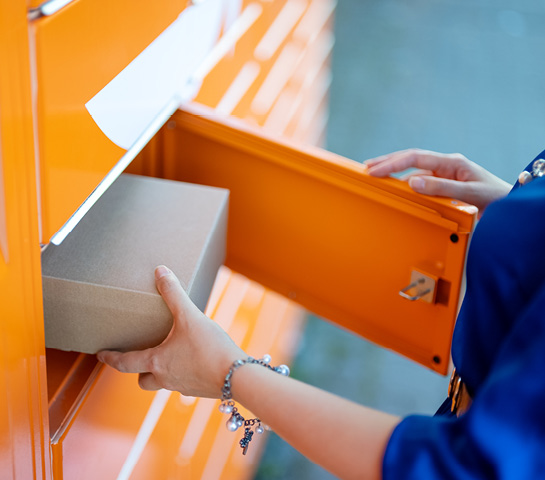
A look at Germany and Europe shows how quickly the market is changing. DHL Group plans to double the number of its pick-up and drop-off points to 30,000 by 2030. At the same time, almost all major parcel services are investing in the expansion of their out-of-home networks. GLS, for example, has expanded its European network from around 70,000 to more than 130,000 locations within two years. Together with DPD, the company is pursuing the goal in Germany of building one of the country’s largest provider-open out-of-home networks under the “inboxx” brand, with 20,000 pick-up and delivery points by the end of 2027.
Investors, too, increasingly see access to out-of-home networks as a strategic competitive advantage. At the beginning of 2026, a consortium led by FedEx and Advent International announced the acquisition of InPost. The valuation of around 7.8 billion euros underlines the economic importance of dense delivery and pick-up networks for the future of the last mile.
Why out-of-home delivery is becoming more important
In Poland and parts of Scandinavia, out-of-home models are already much more firmly established in everyday life than in Germany. In Germany too, the use of parcel lockers and pick-up points is growing steadily.
At the same time, recipients’ expectations are changing. Many people are more mobile in their professional and private lives than they used to be and want to decide for themselves when and where they receive their parcels. This is not mainly about ever faster deliveries, but above all about flexibility, control and reliability.
In addition, delivery conditions in cities are becoming more demanding. More traffic, fewer parking spaces, environmental zones, delivery time windows and new regulatory requirements are increasing the pressure on parcel service providers. While parcel volumes continue to rise, driven in particular by e-commerce, it is becoming increasingly difficult to deliver every parcel to the doorstep efficiently and profitably.
Combining profitability and customer convenience
“For the industry, one thing is especially important: it has to organise the last mile in an economically viable way while also meeting consumers’ desire for convenient delivery,” says Rico Back.
Out-of-home structures make it possible to bundle parcels, reduce delivery stops and use scarce resources more efficiently. This is why parcel services, retail platforms and investors across Europe are investing in the expansion of these networks.
“But success will not be decided by the number of parcel lockers,” says Rico Back. “It will depend on how intensively they are used. Infrastructure only creates an economic advantage if it bundles enough volume and makes delivery more efficient.”
The right balance will be decisive
For Rico Back, there are many reasons to believe that out-of-home structures will become even more important in the coming years. However, traditional home delivery will remain essential for many consumers and use cases.
Whether the billions being invested in new delivery structures will pay off in the long term will not depend solely on network expansion. What matters is whether enough parcel volumes can be directed towards this infrastructure while also meeting consumers’ expectations.
“The industry is currently investing heavily in new delivery structures,” says Rico Back. “But that alone does not guarantee success. The decisive factor will be which models are accepted by customers and can also be operated profitably.”